












Building climate change resilience: The impact of cold chain adoption for Lake Turkana’s fishers
In the face of rising temperatures, climate change is a real threat to the livelihoods of small fishing communities. Adoption of sustainable cold preservation solutions can have powerful livelihood and resilience benefits.
For fishing communities that rely on the waters of Lake Turkana in Kenya for their livelihoods, climate change is a growing threat. As temperatures rise, so does the threat of fish spoilage and catch loss. Yet through technological adaptation, greater resilience to climate shocks can be built. Access to cold storage and cold chain logistics are vital tools to get catch to market efficiently and safely.
Through the Catalysing Agriculture by Scaling Energy Ecosystems (CASEE) programme, Shell Foundation and the UK Foreign, Commonwealth & Development Office (FCDO) support innovative energy and agricultural technologies for fishing and farming communities across Sub-Saharan Africa and South Asia, aiming to boost productivity, income, and climate resilience. Under CASEE, they have backed Keep IT Cool (KIC), a Nairobi-based social enterprise that provides solar refrigeration and cold chain logistics for fishing communities around Lake Victoria and Lake Turkana.
In addition, CASEE funding has also supported Duke University and EfD Kenya in evaluating KIC’s impact on fishing cooperatives around Lake Turkana. The findings show that cold chain adoption not only boosts fishers incomes but also strengthens their resilience to climate shocks, offering a clear pathway for sustainable adaptation in the region.
The difference a cold chain can make
Overall, Lake Turkana fishing cooperatives working with KIC benefited from reduced spoilage and losses, and benefited from greater and better market access, thus enhancing food and income security. The benefits go beyond technological, showing the potential to empower fishing communities.
Key findings
- Fishers from cooperatives that worked with KIC showed reduced spoilage/catch loss in comparison to control groups that did not. This demonstrates that cold storage and cold chain logistics can significantly enhance food and income security, and allow better and more efficient market access.
- KIC’s intervention empowered fishers economically and grew their financial autonomy. Gains from decreased spoilage and better market access allowed fishers to purchase their own fishing equipment, increasing their commitment to fishing and the possibility of scaling up fishing activity, thus further growing livelihoods.
- Fishers used increased earnings to invest in alternative sources of income and diversify their livelihoods, improving their resilience. This is despite the fact that catch levels did not significantly change from before adoption of KIC, indicating the benefits of cold storage and cold chain adoption.
- Fishing communities are intimately aware of the impacts of climate change and higher temperatures on their livelihoods and are willing to pay for greater resilience if they have confidence in KIC’s effectiveness in tackling climate change. Duke’s research showed fisher households with access to KIC feel better prepared to cope with shocks than control groups. Willingness to pay for KIC’s services increased with confidence that it would be effective in increasing their ability to recover from shocks (as shown by Duke’s scenario that offered participants two hypothetical projects that would increase shock recovery rate by 30% and 80% respectively. Willingness to pay for the 80% rate was markedly higher).
How KIC works
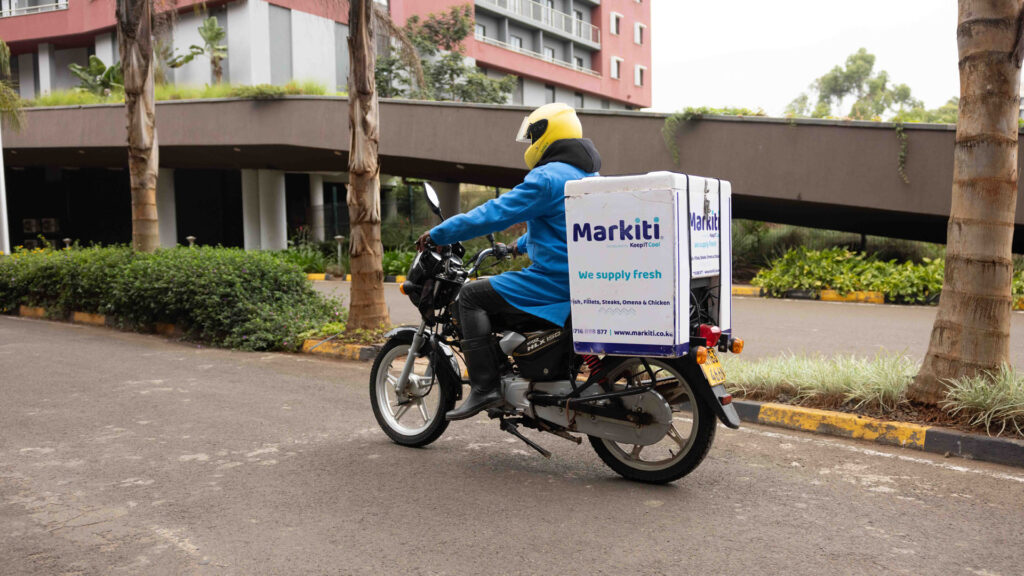
KIC uses Google-powered technology to provide on- and off-grid solar refrigeration storage and cold chain logistics to fishers in Kenya. KIC works with fishing cooperatives to ensure swift catch delivery at beach landing sites to its cold trucks, connecting traders to markets and consumers, and increases value through pre-agreed cash payments and more efficient and better distribution of catch to market. KIC’s input can lift fisher revenues by reducing catch lost to spoilage, and in turn raise incomes and reduce poverty.
Looking forward: Why sustainable cold storage matters
For Lake Turkana’s fishing communities, the risk of catch loss from higher temperatures is increasingly clear. Duke’s study underlines the effectiveness of sustainable cooling tools in enabling food security, livelihoods and income, and a willingness to pay for such resilience. For funders, supporting such innovative sustainable technological solutions for small and medium enterprises can and strengthen empower local communities, in the face of growing climate change threats.
Duke’s survey methodology
Duke’s evaluation was based on a comparison between fishers in treated BMUs (partnered with KIC) and control BMUs (not participating in the partnership) working on Lake Turkana, using a difference-in-difference approach with fixed effects at either the BMU or household level. Data on catch, spoilage, losses, and other fishing and household indicators, including perceptions of resilience, was collected over one year between 2023 and 2024, from KIC starting operations to becoming established with partner cooperatives. The method was not without some risks from sample contamination, with movement between the survey groups over the assessment duration, and data is also subject to the effect of water levels and seasonality on catch.
Latest news and updates
From flame to plug: what India’s micro-food vendors tell us about the commercial future of clean cooking
New research shows how electric cooking is improving productivity, incomes, and working conditions for micro-food vendors across India.
18th March 2026
What gender-responsive financing can unlock for women entrepreneurs
A Gender Results-Based Financing pilot shows how targeted incentives can unlock income growth, resilience, and opportunity for women entrepreneurs.
08th March 2026