

















Climate Change and You: A cool vest on a hot day
Sayantan Bera
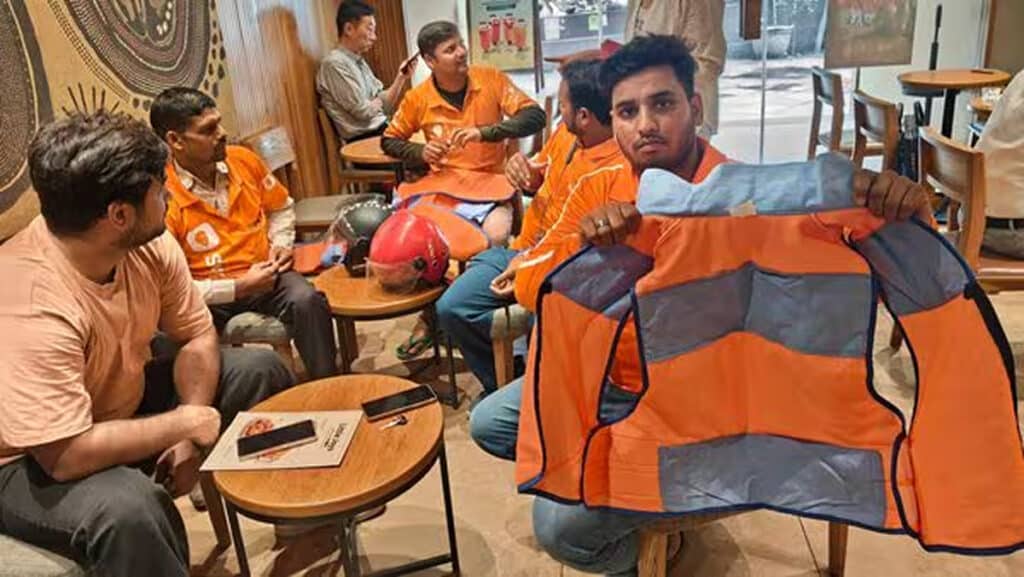
On a sultry July morning this summer, I spent some time with food delivery workers at a café in South Delhi. We discussed the hazards they face, such as a lack of drinking water and toilet facilities or the occasional climbing of stairs to deliver an order. The purpose of the meeting was different. I was keen to understand if wearing a ‘cooling vest’ made their lives any better during the punishing summer months.
This summer, over 7,000 cooling vests were distributed to people who work outdoors, literally with their feet-on-the-street, such as gig workers and construction labourers. The jackets have a layer of polyvinyl alcohol (PVA), which can absorb water and slowly release it as vapour, cooling vital organs. This can protect a rider during the dreaded Loo season in northern India in the months of May and June. The efficiency of evaporative cooling (water coolers function on a similar principle) technology declines as humidity increases with the onset of the monsoon.
The cooling vest project was piloted by Intellecap, an impact advisory firm, to assess its effectiveness and gather feedback for improvement. The project’s design and funding came from Trane Technologies and the Shell Foundation.
So, what did the delivery workers say? They wanted the cooling vest to cover their forearms as well, not just their torso. The vest kept their bodies cool, but they often had to use a wet towel to cover their head. The other problem was that their trousers would get wet from water dripping from the jacket. One said that the jacket should not just cool the torso but also look ‘cool’. The encouraging bit was that most of these young gig workers said they are willing to pay for a redesigned jacket which fixes these teething problems. The jacket currently costs ₹ 1,200 per piece because the PVA material is imported, but the developers hope to bring it down to ₹ 700 with local manufacturing.
It was heartening to see an early-stage technology being tested, made for those who work outdoors in searing temperatures. If a solution like this can prevent heat strokes, which at times lead to multi-organ failure and even death, the cost of a cooling vest is a small price to pay.
Later that day, I also met vegetable vendors testing a cooling shed retrofitted on top of pushcarts. The shed uses an imported white film with both reflective and radiative properties to cool the space underneath. The brighter the sun shines, cooler it turns under the shed. The result is substantially lower temperatures under the shed: about 6-8 degrees Celsius lower than ambient temperature, which improves the shelf life of fruits and vegetables. The hitch is that retrofitting the shade is an expensive affair, costing nearly ₹ 40,000 (the imported film alone costs ₹ 20,000 per canopy). Interestingly, a woman vendor said she is willing to pay up to ₹ 12,000 to have a shed like this after taking into account the improvement in shelf life and lower wastage.
Climate solutions must be both effective and affordable for those who need them most- and endeavours like these offer hope that we may get there soon.
Latest news and updates

EVs Help Grow Freight Driver Income by 25% — But Financing Terms Decide Who Actually Benefits
19th August 2026